


Quick Take
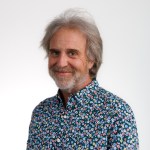
James Fadiman, the man who coined the term "microdosing" and who is a part-time Santa Cruzan, has written a new book with his collaborator Jordan Gruber that serves as a kind of primer on the whys and wherefores of microdosing psychedelics, its benefits for mental and physical health, and the best protocols for doing it.
Is it safe to assume — in 2025, in Santa Cruz, California — that a humble feature writer does not have to define “microdosing” for his audience? I’m going to guess yes. (Now that the CBS affiliate in Minneapolis has run its “What is Microdosing?” story, the term has reached such a the level of mainstream visibility that, if you have not heard of it by now, well, that’s on you.)
But what an even psychedelically savvy local reader might not know is that Santa Cruz occupies an important place in the microdosing origin story.

As far as the practice itself goes, taking small doses of psychoactive and/or hallucinogenic agents to glean positive benefits without intoxication, that probably goes back to ancient or even prehistoric times when the first Stone Age hipster first attempted to stretch his peyote stash through the winter. But in the more recent history of the trend of microdosing, Santa Cruz is kinda where it all began.
So says psychologist James Fadiman, who, in fact, coined the term “microdosing.” Fadiman, who lives part-time in Santa Cruz, is a prominent figure in the contemporary history of psychedelics, having been turned on to psilocybin by none other than Ram Dass himself, the psychologist formerly known as Richard Alpert who, alongside Timothy Leary, became an icon of the psychedelic counterculture in the 1960s. Fadiman and Ram Dass had been friends and colleagues at Harvard.
Decades later – as he writes in his new book, “Microdosing for Health, Healing, and Enhanced Performance,” co-written with fellow psychonaut Jordan Gruber – Fadiman was lunching with a friend in a Greek restaurant in Santa Cruz around 2010. The friend, psychedelic scholar Robert Forte, told the story of Albert Hofmann, the scientist who famously and accidentally first synthesized LSD, and Hofmann’s habit of taking very small doses as he walked in the woods.

“And I said to myself,” Fadiman remembered in a Zoom interview, “Who cares? This is a very small, minor idea. Psychedelics are for transforming your entire world.”
But the idea stuck with him, and soon he was asking friends to take what he calls “sub-threshold” doses of psilocybin, the active ingredient in psychedelic mushrooms, and get back to him on its effects. “And they came back and said, ‘Y’know, it feels really good.’ And the next day they said, ‘It still feels really good.’”
That began a 15-year (and counting) late-life odyssey for Fadiman, 85, to make sense of the benefits of microdosing. On Sunday, March 2, he and Gruber come to Bookshop Santa Cruz to talk about their new book, and to answer the two fundamental questions about microdosing beyond the What? — and that’s the Why? and the How?
Microdosing, said Fadiman, is not about tripping: “When someone says, ‘You know, I’m feeling a little bit high. This is great stuff,’ we say, ‘Well, you just overdosed.’ It should simply work on normal consciousness at normal levels, only at a healthier or improved capacity.”
The practice has its evangelists, chief among them Fadiman and Gruber, who claim that sub-threshold doses of some psychedelic substances can lead to sometimes life-changing improvements in mood, focus, mental health and creative thinking, among other benefits. Many say that microdosing holds the promise to do for depression and anxiety what traditional pharmaceutical solutions have failed to do, and without significant side effects.
But the legal prohibition on psychedelic drugs and organic compounds has limited what could be rigorous and definitive studies on its effectiveness and safety. Some studies confirm the promise of microdosing, while others are less certain and point only to the urgent need for more empirical studies.
“The science has, not surprisingly, lagged behind people’s experience,” said Fadiman. “That’s how science works. Curiously, because microdosing has become so widely popular, we’ve started with real people in real life reporting improvements. And we’re attracting more and more science every day.”
Santa Cruz artist Carissa Louise Martin is one of those who regularly microdoses psilocybin a few times per week. She started microdosing as a way to cope with the pandemic during 2020. She said that the practice was her off-ramp from regularly taking pharmaceutical anti-depressants. It’s now a choice she’s incorporated in her daily life.
“I generally use it to enhance activities I’m going to do anyway,” she said. “If I make art, for example, I’ll microdose like a half hour to an hour before I start. It just helps me find that flow state just a little bit better.”
As to the question that is front of mind with people newly interested in microdosing — where do I get this stuff? — Fadiman and Gruber state bluntly in the book, “We can’t help you there.”
Five years ago, the City of Santa Cruz passed an ordinance “decriminalizing” the possession and use of certain organic psychedelics including magic mushrooms. That placed psychedelics in a legal gray area, not strictly legal but deliberately reclassified as a low priority for local law enforcement. Since the decrim measure, a liminal space has also emerged in any effort to obtain these materials somewhere between the illegal black market and the corner grocery store.
Locally, the Santa Cruz Psychedelic Society brings together people for social meet-ups and events such as twice-monthly microdosing hikes, creating an environment where people share both information and substances. The Holy Trinity of Divine Church in Santa Cruz follows strict protocols in distributing substances — often called “medicine” or “the sacrament” in psychedelic circles — on the basis of constitutionally protected religious freedom. But outside Santa Cruz, because of the illegality of psychedelic materials, such organizations are still very much underground. (In 2023, Gov. Gavin Newsom vetoed a bill that would have decriminalized psychedelics statewide.)
“What I do say to people,” said Fadiman, “is to find people near you who use psychedelics. And if there’s a group near you, go to a meeting and just say what your interests are. To my amazement, in places you would never imagine, psychedelics will probably be available.”
Microdosing, said Martin, also involves a bit of trial and error, to learn what constitutes an effective microdose, based on factors such as body weight, gender, age, general health, etc. “Some people will take just a little bit higher dose as a way to figure out their ideal dosage,” he said. “You’ll want to push it just beyond a certain point, because when it’s too strong, then you know when to pull back.”

Even environment can determine dosage. Martin said she began microdosing while living in Los Angeles. But after moving to Santa Cruz, she found she had to recalibrate her dosage. “Moving from an urban environment to a more natural [environment, like Santa Cruz], I actually had to lower my dosage because it was too strong.”
Psilocybin’s troublesome legal status has kept it out of a commercial market that promotes a dizzying variety of products for better health, from turmeric to krill oil. But it’s also kept it out of the health care mainstream and its claims from greater scrutiny. In this in-between state, those intrigued by the possibilities of microdosing and its potential effect on everything from depression and chronic pain to creativity and mental performance are left with fending for themselves and looking for credible sources of information.
“Think about the reward-to-risk ratio,” said co-author Jordan Gruber. “Psychedelics, even in large doses, aren’t physiologically dangerous, and microdoses are much, much safer. We don’t have a company, we’re not selling a product other than this book. But the fundamental premise that something this safe with such few side effects could fundamentally affect lots of kinds of mental and physical health problems, that could change the world.”
James Fadiman and Jordan Gruber, authors of “Microdosing for Health, Healing, and Enhanced Performance,” will be at Bookshop Santa Cruz on Sunday, March 2, at 4 p.m. It’s free.
Have something to say? Lookout welcomes letters to the editor, within our policies, from readers. Guidelines here.