

Quick Take
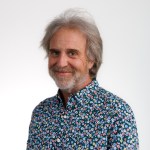
Cabrillo College choir director Cheryl Anderson will retire from her post following her choir's performances this weekend with the Santa Cruz Symphony. Lookout talks with her as she reflects on her 35-year career leading the community in song.
For decades, choir director Cheryl Anderson has been a towering figure at Cabrillo College and the wider choral music community around Monterey Bay. This weekend, after 35 years leading many different choirs at Cabrillo and beyond, Anderson, 77, is retiring from her faculty position. In her final local performance, she leads the Cabrillo Symphonic Chorus in twin performances of Mozart’s “Requiem” with the Santa Cruz Symphony, Saturday at the Santa Cruz Civic and again Sunday at Watsonville’s Mello Center.
Anderson is respected, even beloved, in the music community for her high standards in performance, and for her commitment to take her finest choral groups to venues around the world — she and her choir just recently returned from her umpteenth performance at New York’s legendary Carnegie Hall.
Her husband, John Anderson, conductor and founding artistic director of the Ensemble Monterey chamber orchestra, is also retiring, and the Andersons are planning a busy year of travel. We had a moment to visit with Cheryl Anderson, Santa Cruz County’s Artist of the Year in 2018, to reflect on her long career.
This interview has been edited for length and clarity.
Lookout: Congratulations on your amazing career. Do you remember how you landed at Cabrillo in the first place, back in 1990? Is there a story attached to that?
Cheryl Anderson: Oh, yes. And it’s a funny story. John and I had been teaching at universities that were across the country from each other. And we thought, this is not the way to live. So he got a job at Cal Poly [in San Luis Obispo] and we went there together. So, someone who had been very good friends of ours in graduate school called up and said, “You know, [Cabrillo College music department head] Lile Cruse just called me and asked if I knew anybody who could conduct choir at Cabrillo. So I called Lile immediately, and he said, “Yeah, but the paperwork has to be in today by 5 o’clock.”
I’d never been to Cabrillo or Santa Cruz before, or anything. And so with my only transcripts that I had available to me at the time, I screamed up there from San Luis Obispo, filled out the application, brought my résumé, and turned it in five minutes until 5 p.m. And things somehow worked out.
Lookout: I’m interested in how your deep love of choral music began. Were you a singer as a child? Or did that come later?
Anderson: My family always sang. I went to a one-room schoolhouse in Appalachia, in southwestern Pennsylvania. And my family name was Mounts. And there are more Mountses in the local phone book than Smiths or Joneses. So I went to school mostly with my cousins. And all through high school, I did band — I played French horn — and I sang.
Lookout: When we talk about choral music, there are several kinds: religious music, Broadway music, the classical repertoire that you’ve been doing much of at Cabrillo for many years and, considering where you grew up, I would assume Appalachian folk music as well. Were you doing all that stuff as a young singer?
Anderson: Yes, all of it. Folk music was a huge part of my life. In my first teaching position at Virginia Beach, Virginia, we didn’t get paid in the summer. So I was waiting tables until about 9 o’clock every night. Then, I took my guitar and I would play folk music in bars as a solo act until 1 or 2 in the morning. I closed every night with the song “Climb Ev’ry Mountain,” where the bartender and his wife would turn on the blender while I was singing.

Lookout: In your long career at Cabrillo, you have led several different ensembles on stage. What’s the largest group you’ve ever led in performance on stage?
Anderson: Well, one time, many many years ago now, I decided that all the Cabrillo choirs, and all the high school choirs and elementary school choirs, should be on stage at the same time. We did this only once, because I never had the resources to do it again. We went to the Civic, and there were about one thousand people on stage. And it was awesome. We had to drag in risers from everywhere.
Lookout: You’ve performed many times as a choir director at Carnegie Hall. Is that stage particularly special to you? Or is it just another stage among many?
Anderson: Oh my gosh, it’s been very special. I did my doctoral work at the University of Cincinnati, and my teachers there had been students of [famed Carnegie Hall choral director] Robert Shaw. And when I was there, we got to sing for two weeks with Shaw himself. It was life-changing. He was so monumentally brilliant, and he was so meticulous.
The first time I stepped on the stage at Carnegie Hall, I swear I almost fainted. It’s just so beautiful. It’s exquisite, really. You just walk down the halls and every famous person who’s ever performed there from Judy Garland to Jascha Heifetz, their pictures are everywhere. I gotta tell you, every time I go there, there is a moment I break down in tears.
Lookout: You have also led a remarkable life taking choral groups around the world. What are some of the more memorable places you’ve performed?
Anderson: Wow, well, every one is distinctive. Our trip to Cuba was just after [President Barack] Obama came into office, during that sliver of time when you could actually legally go there. We got off the bus in Cienfuegos, a beach town much like Santa Cruz, and we were just flooded with media — radio, TV, newspapers — and they all wanted to know why we were there. And we said, it’s about people and it’s about singing. It didn’t have anything to do with governments. And it was an immersion in such a different culture and we went all over the country, to the far east and the north and south, and it was beautiful.
Another was South Africa where we sang, not in the big Dutch churches, but in the small towns in the backcountry, in Quonset huts or tin buildings. And the local choirs there were amazing. They sang all African songs, and their harmonies were beautiful.

Lookout: Let’s talk about music. What do you consider the most emotionally moving piece of choral music?
Anderson: I would say “The St. Matthew Passion” by J.S. Bach. When I was in my doctoral program, singing with Robert Shaw. We sang “St. Matthew Passion” with Mr. Shaw. There is a famous aria in which the mezzo represents Mary holding the crucified Jesus. And it’s so poignant. And every time Shaw and [the mezzo-soprano at the time] Marietta Simpson would give each other the eye. And during the first performance, they both just lost it and broke down in tears.
During the break, Mr. Shaw brought all the doctoral students together and said, “What I did there, don’t ever do that. Don’t cross that psychic barrier of your own emotions. You must let the audience have the emotion.”
I went home and I thought about it, and finally I wrote to him, “Mr. Shaw, with all due respect, I think you’re wrong. You taught us more in those three minutes than I ever learned from anybody. You have to live the music. You have to let it pierce you.”
Lookout: What’s the most challenging or difficult piece of music you’ve ever led a choir through?
Anderson: Oh, hands down, “Karawane” by Esa-Pekka Salonen. I don’t even have to think about it. We were doing the Beethoven Mass in C [with the Santa Cruz Symphony], a beautiful piece but not easy. And [Symphony conductor] Danny [Stewart] called me. He said, “I have an idea. It’s a piece called ‘Karawane’ and it’s written to a Dadaist text. Do you think we can do it?” Well, he sent me the music, and I looked at it and instantly thought, nobody can do this. But he was so enthusiastic and so excited about it, I just said, “If you think we can do it, we will do it.” I gotta tell you, there’s nothing more affirming than somebody believing in you. So we did it. It was Mr. Toad’s wild ride, for sure. But we made it.

Lookout: So, finally, what now for you?
Anderson: My husband [John] also retired from Ensemble Monterey this year. So, at first, we’re going to travel. We’re going to drive across the country and visit friends and places we’ve never had the time to visit. Then, after that, we’re going to Egypt, see everything there, and float down the Nile. You know, I love traveling with 150 people doing music, but touring [as a choir] is not a vacation.
And there are so many pieces of music that I would love to do. So, I’ll be doing a lot of guest conducting and that gives me the opportunity to be part of that. And, after I’ve been gone for a while and my replacement at Cabrillo has had a chance to establish themselves, I’d like to work to benefit Cabrillo in some way. I have a lot still to do.
The Santa Cruz Symphony and the Cabrillo Symphonic Chorus will perform Mozart’s “Requiem in D Minor” on Saturday at 7:30 p.m. at the Santa Cruz Civic Auditorium and on Sunday at 2 p.m. at the Mello Center in Watsonville.
Have something to say? Lookout welcomes letters to the editor, within our policies, from readers. Guidelines here.
