

Quick Take
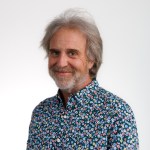
Mike Rotkin arrived in Santa Cruz in 1969, not long after the University of California, and soon not only became a pillar of UCSC’s Community Studies program but launched into the progressive politics that reshaped the city. He served a record five terms as mayor and in a variety of other positions. He passed away at his home Wednesday.
Lookout invites readers to share memories of Mike Rotkin – find out more here.
He will forever be known for his record five stints as Santa Cruz’s mayor, and for serving nearly 25 years on the Santa Cruz City Council, more than any other person.
But in terms of Mike Rotkin’s impact and influence, those numbers are trivial.
In any story about Santa Cruz’s progressive community activism over the past 50 years, Rotkin, who died Wednesday at his home in Santa Cruz at 79 from complications from leukemia, is an essential figure.
He first emerged on the local political scene in the early 1970s from UC Santa Cruz’s Community Studies program as a trailblazing progressive activist, and was active as recently as this year as commissioner on the county’s Regional Transportation Commission.
In between, he was active in a dizzying number of projects and issues, including (but not limited to) neighborhood organizing, environment, LGBTQ, the Santa Cruz public library system, social services, health care, union representation, UCSC activism, economic development, water, housing and transit, all commitments he maintained for half a century.

And, still he also found time to volunteer to escort young women visiting Planned Parenthood, to visit middle schools and talk to students about the U.S. Constitution, and read to children at Garfield Park library, which remains a part of the county library system today partly because of his efforts to keep it open.
Rotkin was, in many ways, an embodiment of Santa Cruz’s modern political identity. He was arrested dozens of times, mostly as part of public protests — his first arrest was at 15, alongside his own father, in a civil rights sit-in in Maryland. He came from campus into the hurly-burly of Santa Cruz politics as a self-professed Marxist and socialist. Yet, he quickly mastered the art of realpolitik, built relationships with political opponents, zeroed in on productive compromises, and always chose progress over ideological purity. Defying stereotypes, he was the woolly Marxist who became the “adult in the room” on most political issues.
“He was a joy to work with,” said longtime friend and colleague Cynthia Mathews, who herself served six four-year terms on the Santa Cruz City Council. “He was always very broad in his interests and in [allocating] his energy to building a stronger community. He was very clear on his values, but still very open to discussion, finding a common ground and understanding where the other person was coming from, in always a positive and respectful manner.”
Rotkin’s roots
Rotkin first arrived in Santa Cruz in 1969. In a long 2013 interview with oral historian Sarah Rabkin for UCSC’s Regional History Project, he said that within two days of coming to town, he went to see a movie at the arthouse cinema The Nickelodeon. In the middle of the movie, the stranger he was sitting beside passed him a joint. “The idea of a town that would be loose enough that total strangers would pass joints down rows in movie theaters, I thought that was pretty amazing, to be honest,” he said.
Rotkin was born in New York City in 1945, but grew up mostly in Maryland, in a rural environment not far from Washington, D.C. His parents were both part of the Young People’s Socialist League, and in fact met as teens during a hike organized by the Socialist Party. His father — the son of Russian Jewish immigrants — was a patent officer who had an engineering degree, his mother a history teacher and labor organizer.
Rotkin attended Cornell University, originally to study engineering. He soon flunked out of school only to reapply later, eventually earning his degree in English literature. In between those two stints at Cornell, he served in VISTA, a program established in the 1960s as a kind of domestic version of the Peace Corps. At VISTA, Rotkin worked as a community organizer with migrant farm workers in Florida.
MIKE ROTKIN ON SANTA CRUZ POLITICS: Read his columns for Lookout’s Community Voices opinion section here
He first came to California trailing his mentor, Bill Friedland, a Cornell sociologist who was plucked by the then-newly established UCSC to create a community studies program there. Encouraged by Friedland, Rotkin entered the graduate program in the History of Consciousness department, and took on a job as a teaching assistant in the newly created Community Studies program, where he eventually taught for decades. (Rotkin didn’t finish his Ph.D. dissertation in “HistCon” until 1991.)
Santa Cruz yoga instructor Mark Stephens was one of Rotkin’s early students in Community Studies. “He made it feel like you were in the classroom with a friend,” said Stephens, who went on to become one of Rotkin’s closest friends. “From the very first class, he got us talking, got us engaged. He found a variety of ways to get students to talk about their real lives. He would give a lecture, giving some theory or some structure for understanding things in society. But he would leave it to students to make sense of that in how it practically applied to their own lives.”
U.S. society at the time was bitterly divided between old-line conservatives and the “New Left,” often centered on college campuses. And Rotkin’s classes often included conservatives or others who didn’t always see eye-to-eye with him politically. “He was just incredibly respectful of everybody,” said Stephens. He was interested in developing community activists, though not necessarily from any political vantage point, only to help people make their neighborhoods and communities stronger and more connected. “He allowed us to speak our minds without a sense that we were being judged.”
The neighborhood activist
Rotkin’s first taste of activism in Santa Cruz came in 1973, when he lined up behind a young attorney named Gary Patton to stop the development of a convention center/hotel at Lighthouse Field, near Rotkin’s home. That led to further activism in stopping a Highway 1 freeway from running through Santa Cruz. Meanwhile, Rotkin’s students at UCSC were participating in grape boycotts in support of the United Farm Workers, and other activism. Much of the energy coming from the progressive side in that era was emanating from Community Studies.
In 1979, in the wake of the controversial passage of Proposition 13, which slashed county budgets, the county’s library board voted to close the small Garfield Park branch of the public library. The decision led to the formation of a group called Westside Neighbors, which worked to keep the library open. The group’s success in reopening Garfield Park led Rotkin to do what he previously thought he’d never do, enter electoral politics. Alongside fellow progressive Bruce Van Allen, Rotkin ran for a seat on the Santa Cruz City Council. Given his status as a “socialist-feminist,” many thought he’d fail. The two headed up a slate endorsed by Westside Neighbors. Buoyed by UCSC’s student body and those who had graduated but stayed in Santa Cruz — and despite loud opposition to the slate that claimed the progressives were being controlled by Tom Hayden and Jane Fonda — Rotkin and Van Allen captured two of the four contested seats on the city council.

Two years later, Rotkin, Van Allen and Councilmember Bert Muhly were looking to make history by attaining a progressive majority on the council in the 1981 elections. The election that year of Mardi Wormhoudt and John Laird gave the progressives a majority, and Mike Rotkin became Santa Cruz’s mayor.
Thus began Rotkin’s long career in (and occasionally out) of city politics. Former councilmember and county supervisor Ryan Coonerty served alongside Rotkin on the council for several years — as did Coonerty’s father, Bookshop Santa Cruz’s Neal Coonerty.
“He always dove deep into specific issues,” said Ryan Coonerty, “like, say, trash and recycling, water, transportation. These were not the sexiest issues, but he always went into the systems that made a community livable and do the work that could drive his values and his community’s values. He would just work from the ground up, talking to people operating a system so he had a real understanding of how these systems played out in the community.”
The structure of things
Understanding systems was at the core of Rotkin’s political activism, in both bringing out change and reform and in dealing with potential political adversaries. It was a lesson he first learned under Bill Friedland, the mentor who originally brought him to Santa Cruz.
“The key thing that I learned from him,” said Rotkin in the 2013 Rabkin interview, “was the idea that you can understand things systematically. I had always sort of thought of problems being, like, evil people or undereducated people or ignorant people or racist people or whatever — individuals with bad ideas and consciousness. Friedland really got me thinking of the structure of things.”
In his early work with migrant workers, he was able to see beyond the trope that workers were “undereducated” and farmers were evil, but that it was a structured system that caused repression and exploitation. This led him to a critique of American capitalism as a system based on exploitation in the name of profits, and that an individual’s morality matters less than a system’s design.

“It tends to take politics away from personality and put it much more into changing structures and the systems that we operate under,” he said. “And no need to hate the individual people that are in these positions of power.”
Mark Stephens points to Rotkin’s work in the wake of the 1989 Loma Prieta earthquake as a prime example of his ability to put real and practical considerations ahead of partisan or ideological thinking, becoming the Marxist who embraced economic development.
He would say, “‘Look, we’re going to rebuild downtown,’” said Stephens, “‘So, we need bankers, we need businesspeople. We need everyone to collaborate in making something work. But we’re not going to get things done purely by public initiative. We need to have private investors with that. So, yeah, we’re going to have to work with … developers, and sometimes that means you develop even more friendly relationships with those developers, because you want to work with them over a long period of time.”
Rotkin had no problem compromising, Stephens said, “so long as he felt that those compromises were part of a larger picture of moving things forward.”
That also meant developing relationships with people on the opposite side of the political spectrum. Rotkin once told me that he had maintained good relationships, even friendships, with conservatives and Republicans, while working on the city council.
“We were always very polite to each other,” he said of a fellow councilmember who was conservative and had once voted against an entire budget because it had social services funding in it back in the bare-knuckles days of the 1980s. “We would try not to make anything a personal attack against the other person, and we argued on the logic of our positions, without trashing each other.”
Ryan Coonerty tells the story of his wife’s grandfather, an old-school Santa Cruz Republican who was vocally dismissive of the socialist-feminist Mike Rotkin. A few years later, Coonerty drove past the man’s house and noticed a Rotkin yard sign. Coonerty later asked his grandfather-in-law about the sign. “‘Well,’ he said, ‘I moved a little toward him and he moved a little toward me.’ And I thought, in small-town politics, that’s the essence of how you build a broad base in a community and [make] lasting change.”
Rotkin witnessed the Santa Cruz City Council move slowly but inexorably toward complete control by progressives, from 4-3 to 5-2 to, by the mid-1990s, a unanimous consensus of all seven members thinking of themselves as progressives. But even a 7-0 progressive council has fights, sometimes big, destructive ones. Rotkin believed that the differences among Santa Cruz’s leaders were trivial, that there was so much they could do if they could put personalities aside.

Of modern political sensibilities, he told me in a 2024 interview, “Sure, you sound like you’re passionate about these issues. Are you willing to give a blistering speech about the issue and throw everybody that doesn’t totally agree with you under the bus? Or would you rather think, ‘What can we work on in the medium and long term that actually gets something done’?”
Rotkin never lost sight of the role of government to provide essential services, said Coonerty. “He was never going to be an ideologue about getting people clean water or the trash picked up.”
“He’s totally a people person,” said Cynthia Mathews. “If you met him, you couldn’t not like him. You would talk to the business community and you’d hear it all the time, ‘I used to think he was really radical, but now I realize he’s a pretty reasonable guy.’”
“Mike was one of the most spiritual people I knew in Santa Cruz,” said Stephens. “And you might think, ‘What? Mike Rotkin? He’s an atheist, right?’ Well, yeah. He’s a materialist. But he’s profoundly spiritual in the sense that he always believed in that socialist ideal: To each according to their need, and from each according to their ability. People don’t really see the acts of loving kindness that he’s done in his everyday life. No, he doesn’t go to church, or bow down to this or that. He bows down to humanity.”
Despite his high-profile and long years at UCSC, as a community activist and on various boards and commissions, including his time on city council, Rotkin was never an attention-seeker, said his longtime friend Carol Fuller.
“Mike’s a worker bee,” she said. “Mike doesn’t need to feel important. He’ll just do his part. He doesn’t need to get the recognition. He’s just a genuine person who wants to make the world better, wants to work with other people, and wants to see things move forward incrementally, if necessary.”

In his many years at Community Studies, it’s impossible to calculate how many people Rotkin has influenced by his insistence to look deeper into what constitutes meaningful political and social activism. Surely, his former students are spread across the country and around the world in all kinds of positions in life, powerful or otherwise. To the degree that those hundreds, or even thousands, of people have taken his teachings to heart — that it’s systems, not people, that are the cause of the world’s suffering and injustice — they form a countervailing force in a world that today is riven with conflict. As a humanist above all else, Rotkin believed in the possibilities of people coming together despite their differences.
In the Rabkin interview, Rotkin learned that lesson early on, back during his college days protesting the Vietnam War, before he ever set foot in Santa Cruz.
“Conservatives would come to attack our rally,” he said. “They’d stand on the periphery of it with a sign saying, ‘Traitors!’ or something. You’d go engage them. Within a couple of weeks, you became their friends, and they joined the movement. They went from right-wing, hating the movement, to becoming a member of it. So the idea that people are the way they are, and there’s nothing you can do, or you can’t change people, or that you can’t build a movement, or that institutions can’t change, or you can’t do something about them — I don’t believe that, and I don’t [not] believe it because I read it in a book. I don’t believe it because I’ve [seen] in my own life experience that those changes are possible.”
Have something to say? Lookout welcomes letters to the editor, within our policies, from readers. Guidelines here.
