


Quick Take
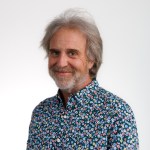
Inspired by his experience evacuating from the CZU fires in 2020, former Google innovation chief Frederik Pferdt has written a new book about what it's going to take to be "future ready," and create a better future for humanity. He'll talk about it next week at Bookshop Santa Cruz.
Four years ago, Frederik Pferdt and his family embarked from Santa Cruz for a summer road trip. But what made this particular trip different from thousands of similar family summer vacations is that this one wasn’t planned.
It was the summer of the CZU fires, and the Pferdts’ mountain home, near Henry Cowell Redwoods State Park, was under threat. The moment came when Pferdt, his wife, Angela, and their three children had to evacuate. They had practiced the drill that so many California homeowners are familiar with these days, packing essentials and valuables in a brief window of time and getting away. But once they had left their home behind and were on the road in their Volkswagen Vanagon, there was no plan.
“We basically sat down with the kids and said, ‘We’re going to go on a road trip,’” said Pferdt, “‘We’re not sure if or when we’re going to return, but at the same time, this is an opportunity for us as a family to go see friends and do some things that we’ve never done before.’”
The Pferdts parked in friends’ driveways, visited Lake Tahoe, and wondered about the fate of their home. In all, they were gone for 12 days, and they came home to good news — their house was untouched by the fires.
As Google’s “chief innovation evangelist” for more than a decade, Pferdt has been accustomed to thinking about the future. In fact, it was his job. But the CZU episode with his family fundamentally changed the orientation of that thinking and brought home to him a powerful lesson, that the future can come at you suddenly.

The experience was both the inspiration and the guiding metaphor for Pferdt’s new book, “What’s Next Is Now: How to Live Future Ready” (Harper Business). On Tuesday, he will be at Bookshop Santa Cruz to talk about the project. (One hour earlier, at 6 p.m., Lookout will host a reception featuring the author at Lookout’s downtown office.)
The Pferdts had moved from Sunnyvale to their mountain home near Felton less than a year before CZU. But even if he had lost his home to the fire, Pferdt saw no point in regretting the decision to move to Santa Cruz County.
“That’s an attitude of looking backwards,” he said, “and trying to fix things that happened in the past, or decisions we can’t undo. [People] can be so funny — we’re asking ourselves: ‘What if we haven’t done that?’ instead of, ‘What’s the better thing that I can do moving forward?’”
“What’s Next” is not a book of prognostications. It’s not a crystal-ball look into an artificial intelligence-shaped, climate-altered world. It is more of a proscriptive guide on how to develop what he calls a “future-ready mindstate.”
“Here’s a good idea,” Pferdt writes in the book’s opening chapter. “Let’s take the narrative away from the futurists. Instead of fretting about what could happen in THE future, think hard about what should happen in YOUR future.” To that end, he posits five psychological tools to develop the mindset adaptable enough to survive an uncertain future: optimism, openness, curiosity, experimentation and empathy. These are the qualities, he said, that he found in the many people he worked with in founding Google’s Innovation Lab and in teaching classes in creativity and innovation at Stanford University. A sixth characteristic quality is something he calls “Dimension X.”
“There is always something unique about everyone, we all have something that is truly unique to ourselves,” he said. “What’s interesting is that sometimes we don’t know what it is, right? Other people might say he’s a great storyteller, or she connects the dots easily. That could be something other people are saying about you. What I want to do is help people to find their Dimension X, to really do some deep reflection about their life, to say, ‘OK, what was it that helped me when I faced this or that challenge?’ Then you have a better sense, I think, of your unique superpower, what I define as a Dimension X.”
His own Dimension X? Pferdt said that it was a “bias toward action,” the impulse not to overplan or overthink something, to, for example, take off on an impromptu road trip when your home is threatened by wildfire.
The book also features a series of short essays from 14 people Pferdt chose from his years at Google — he worked there for more than 12 years, leaving in 2022 — people he refers to as “bright minds, great hearts.” They include venture capital exec Tom Chi, videographer Jon Ratcliffe, design strategist Sarah Camacho and many others. Their contributions to the book are each a variation of the theme of adapting to an uncertain future and creating a more positive one.
“They’re all Googlers, or ex-Googlers,” Pferdt said. “I had about 650 people that I worked with very closely at Google, and they all did remarkable work. I trained them, I coached them, I mentored them, and I learned with them. And the 14 people I picked were a selection of those 650 people.”

With everything from the climate to global democracy now seemingly on the verge of enormous changes, anxiety about the future is as intense as it’s been since the heyday of the Cold War. But Pferdt said change won’t happen on a societal level until it happens on a personal level.
“We live in a time when we feel like all of our institutions are failing,” he said. “Institutions are run by people like you and me. We are part of institutions and communities. So what I believe is that instead of saying, ‘How can I change the institution?’, [you should ask,] ‘How can I change myself?’ And I think as soon as more and more people live by dimensions or ideas or principles, I would argue then we’ll see an improvement in the institutions. We’re already seeing that we’re moving away from that question, ‘What will the future bring?’ to ‘What future do I want to create?’”
Frederik G. Pferdt will be at Bookshop Santa Cruz to talk about his new book on Tuesday at 7 p.m. One hour earlier, Lookout will host a reception featuring the author at 6 p.m. at Lookout’s downtown office. Both events are free.
Have something to say? Lookout welcomes letters to the editor, within our policies, from readers. Guidelines here.