


Quick Take
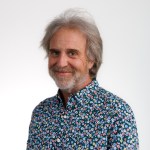
John Freeman's "California Rewritten" is a collection of essays on significant books by living writers on the experience of living in California. Freeman comes to Bookshop Santa Cruz to talk about the new book Thursday.
Just a decade or two ago, any retrospective of California’s legacy in literature would have to include Jack London, John Steinbeck and, maybe for a “modern” perspective, Joan Didion.
John Freeman’s new book, “California Rewritten,” doesn’t operate on that playing field. However much he respects those monumental literary names, Freeman, an accomplished editor, poet and literary anthologist, feels an upgrade is in order. His new book of essays serves as a handy field guide to the Golden State’s current literary landscape — covering almost 50 books from living writers that capture the California experience, complete with an appendix listing 99 other quintessentially California titles from writers living and dead.
Freeman appears Thursday at Bookshop Santa Cruz to share a conversation with Santa Cruz novelist Karen Tei Yamashita, whose 2010 novel “I Hotel” merits a chapter in the book.
The essays that make up the book are not, said Freeman, book reviews per se.
“Yeah, there’s things about plot, and how the book is written, and how it feels to read,” he said. “But also it gets you to think about, in the most expansive way, what the book is really about and what it’s asking you to meditate on.”
An example is the essay on the novel “The Gold Coast,” part of what’s known as the “Three Californias Trilogy” by the inventive science-fiction writer Kim Stanley Robinson. Freeman’s essay opens with his own experience taking a ride in a driverless taxi in San Francisco, and what that meant from someone who grew up imagining a “Jetsons”-like future. Robinson’s “The Gold Coast,” written in 1988, is set in 2027, and Freeman gets the opportunity to examine the novel’s relevance to the real world with 2027 fast approaching. The book imagines a group of dissolute, cynical defense contractors, riding in driverless cars and taking hallucinogenic drugs by eye-dropper, dreaming up ever more effective ways of killing. Substitute in Silicon Valley social-media designers and Robinson is not far from the truth. In his essay, Freeman wonders, “Has technology made decimation and starting over the only way we can see change?”
The essays in “California Rewritten” were born of another event that seems like it was dreamed up in a sci-fi novel: the 2020 COVID pandemic. When the shutdown occurred, Freeman was writing for Alta Journal, an online arts & culture publication focused on California. As a response, Freeman started the California Book Club, a Zoom-based forum in which he could discuss novels, memoirs and nonfiction pertaining to California life. During the pandemic, the book club became a phenomenon — Freeman said that about 20,000 people eventually signed up for the live book club presentations. Freeman began writing more and more essays to meet the interest of his suddenly isolated readers.

“It was really just a way of getting together in the way that we previously did, online as book fanatics because we couldn’t do it in the real world,” he said.
That first book club meeting featured a conversation between novelist C Pam Zhang, the author of the 2020 Gold Rush-era historical novel “How Much of These Hills is Gold,” and a historian of the Sierra Nevada. That session went so well, Freeman invited legendary Los Angeles novelist Walter Mosley to participate, and published an essay accompanying each Zoom meeting.
(The next online meeting of the California Book Club — talking about Freeman’s own book — takes place Thursday, just a couple of hours before Freeman and Yamashita sit down together at Bookshop.)
In putting together a collection of representative California writing, Freeman wanted to present a broader picture of the California experience by embracing prominent works from writers of color, including Mosley, Tommy Orange, Maxine Hong Kingston and many others. Santa Cruz County’s contributions to the essay collection include Yamashita, a professor emerita at UC Santa Cruz, UCSC alum Reyna Grande, author of the memoir “The Distance Between Us,” and Watsonville writer Jaime Cortez, whose 2021 collection of short stories, “Gordo,” was set in the immigrant camps of the Monterey Bay area.
“This book feels way overdue in a way,” said Freeman, “in that it’s acknowledging what’s been in front of us for a long time.”
Referencing Cortez’s coming-of-age stories in “Gordo,” most set in the fields near Watsonville and San Juan Bautista, Freeman said that the California experience has been enlarged and made sharper by more respect afforded writers of color in recent years.
“To me, it was, what would it feel like if Steinbeck’s characters from, say, ‘Tortilla Flats’ or other books told their own stories, rather than him writing about them? I don’t think it belittles at all what Steinbeck himself accomplished in his life with those great books,” Freeman said. “But I feel it’s an important update to have those stories told by someone who grew up in a [migrant labor] camp like that.”
One more chapter that might bear more scrutiny in Santa Cruz than in other places is the essay on the fine surf memoir “Barbarian Days: A Surfing Life” (2015) by UCSC grad William Finnegan.
“To me, that’s the ‘Moby Dick’ of surfing,” said Freeman of “Barbarian Days.” “It’s such a great update of the wayward adventurer’s tale. He travels around the world, searching for the biggest waves. But along the way, he grows up quite a bit, and his attitude about being a white guy surfing around the world changes a lot too, especially by the time he gets to South Africa during apartheid. It’s an amazing book.”
John Freeman and Karen Tei Yamashita will discuss “California Rewritten” on Thursday, Oct. 16, at Bookshop Santa Cruz. The free event begins at 7 p.m.
Have something to say? Lookout welcomes letters to the editor, within our policies, from readers. Guidelines here.