


Quick Take
The Festival of Monsters, presented by UC Santa Cruz's Center for Monster Studies, strikes the balance between fun, pop-culture fizziness and serious consideration of literary and mythological ideas of the monster. It begins Friday with a public event, followed by an academic conference on campus.
Perhaps it was the early 1960s, with the popularity of the novelty hit “Monster Mash” and the goofy sitcom “The Munsters.” But somewhere along the pop-culture timeline, monsters went kitsch.
Since then, the campy, kid-friendly, thoroughly non-threatening aspects of the monster have become so dominant that The Center for Monster Studies at UC Santa Cruz has to declare on its website: “We take monsters seriously.”
That doesn’t mean that the Center is a killjoy — which it hopes to prove with its upcoming Festival of Monsters, opening Friday. It means only that it is devoted to walking that fine line between the fun of pop-culture monsters and serious scholarship of monsters in literature, folklore and religion.
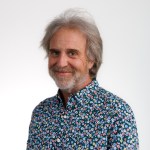
“Monster” is one of those terms that needs explanation precisely because it is so commonly used in a variety of contexts and meanings. As Michael Chemers, the founding director of the Center for Monster Studies, sees it, the monster is a creature of the imagination, essentially trapped between the human world and the non-human world.
“When people hear about what we do,” said Chemers, “their first reaction is that they’re enchanted, because everyone loves monsters, right? But then they go, ‘Oh, but is this a serious scholarly pursuit?’ And that’s when we usually have to do the explaining, to help people understand what monster studies is actually trying to accomplish in terms of its role in the arts and humanities.”
Monsters are literary inventions designed to challenge human empathy and to embody human fears. But there’s also, said Chemers, an undeniable socio-political element to them.
“At the end of the day, it’s about othering people based on characteristics like gender, race, ethnicity, religion — and then using that monsterization as an excuse to commit atrocity against those people. Unfortunately, we are living in a time when that is happening all over the place. People are monsterizing their political enemies, and it’s very, very dangerous. And so we believe that by studying monsters and going one step further and embracing our own monstrosity, we will learn more about what it is to be human.”
The festival contains both a public aspect and a more rarefied, scholarly conference. It opens on Friday at the Museum of Art & History in downtown Santa Cruz with a book event featuring young-adult author Kiersten White, who often plays with monster themes in her novels. She’ll discuss her new book “Lucy Undying,” which continues the story of Lucy Westenra, one of the first victims of the famous title character in Bram Stoker’s “Dracula.”
White’s appearance is followed by a presentation by horror-mask designer Chris Zephro of Santa Cruz-based Trick or Treat Studios. Then, the local aerial dance troupe Circus of the Moon will perform a monster-themed dance piece titled “Pluto’s Labyrinth.”
On Saturday, the festival shifts to the campus of UCSC, where the archetypal vampire film, F.W. Murnau’s 1922 silent classic “Nosferatu,” will be screened outdoors on the lower lawn at Oakes College.
That event launches the academic conference, taking place at the Digital Arts Research Center on campus, featuring keynote talks, a play performance and a live recording of the center’s podcast, “The Show Where They Talk About Monsters.” The conference wraps up with the annual Monster’s Ball, this year taking place at the Hay Barn on campus. (The MAH events on Friday are free; the academic conference is $185-$235.)
The Center for Monster Studies is the only institution of its kind he knows of, said director Chemers. The Festival of Monsters is designed to bring a bit of depth and context to the season associated with Halloween, and, through its study of mythological and literary monsters, to provide insights into the fears that the human imagination is so good at conjuring.

“It is true,” said Chemers, “that humans can behave monstrously. But it is critically important that we remember monsters don’t really exist. They are real only in the sense that they have real effects on real people. You could be burned at the stake for being a witch until the 19th century as an example. But the monster doesn’t exist. And it’s important to really remember that, so that we can keep it straight in our head and not engage in monsterizing other people as a prelude to committing atrocity against them. If you look at the monster and see the other then you are setting yourself up to do terrible things to somebody. But if you look at the monster and see yourself — ah, then you are on the verge of some genuinely powerful psychological growth and self discovery.”
The Festival of Monsters opens Friday with a free event at the Santa Cruz Museum of Art & History. It continues with an academic conference at UC Santa Cruz on Oct. 16-18.
Have something to say? Lookout welcomes letters to the editor, within our policies, from readers. Guidelines here.