

Quick Take
In “The Latino Century: How America’s Largest Minority is Transforming Democracy,” veteran Republican Mike Madrid likens the American political struggle as a footrace between an emerging and hopeful, largely Latino generation and an older, privileged, largely white generation with a bleak view of the future. The Lincoln Project co-founder will talk about it July 8 at Bookshop Santa Cruz.
It is the demographic fact that may be at the subconscious (or, maybe not so subconscious) core of the maddening political dysfunction that has gripped America for most of the 21st century: The country is, day by day, becoming more Latino, and less white. One of the myriad ways you might characterize the stark political divide in the U.S. is between those who view that fact with equanimity, even optimism, and those who view it with existential alarm.
As a veteran political operative and analyst, a key figure in the California Republican Party, and a Mexican American, Mike Madrid has lived and built a career in the midst of the Latino demographic resurgence. And now, he’s written a book about it that combines his love of political data with his own life story.
In “The Latino Century: How America’s Largest Minority Is Transforming Democracy” (Simon & Schuster), Madrid likens the American political struggle as a footrace between an emerging and hopeful, largely Latino generation and an older, privileged, largely white generation with a bleak view of the future. And the finish line for that foot race may be the 2024 presidential election.
Born and raised in Southern California, Madrid was inspired as a kid by the conservative optimism of Ronald Reagan and became a committed Republican in the process. But when Donald Trump took the reins of the party, Madrid signed on as a co-founder of The Lincoln Project, the advocacy group made up of Republicans who believe that Trump represented a betrayal of conservative principles.
On July 8, Madrid comes to Bookshop Santa Cruz to talk about his new book, 2024 and the Latino future. Lookout had a chance to chat with him about Latino political muscle in California, the overlooked political acumen of George W. Bush, and why he’s still proud to be a Republican. Our conversation has been edited for brevity and clarity.
Lookout: Let’s start on a local level. We here in Santa Cruz County have two dominant population centers — one of those is predominantly white and tourist-oriented and the other is largely Latino and agricultural. Historically, Santa Cruz and Watsonville haven’t always had a lot to say to each other, at least culturally. A similar dynamic is at play in many counties across California. How does the coming “Latino century” as you put it potentially change that dynamic?
Mike Madrid: These are all questions I’ve been grappling with for 30 years. Let me say this: We’re going to very soon start hearing the phrase “Whites are not monolithic.” We say that about every other group, but not whites. As whites shrink as a share of the population, we’re starting to understand some of the different nuances of white voters. And it’s an important point because Santa Cruz is a very progressive area. The opportunity for Americans to move beyond a racially polarized paradigm is very likely, and that’s what I think will ultimately happen, at least in our rhetoric. What will continue, I think, to limit us is the class distinction – once we begin to have a class discussion, then we can start talking about policy in a very different way that I think is much more productive. And maybe I’m pollyannaish about that, but I’m hopeful for that. To me, that’s the promise of where we’re all going, where this is heading.
Our policies in California have led to a very economically stratified society. And we look at questions that the state legislature brought up just a couple weeks ago on housing density in coastal counties. White progressive leaders are very adamantly opposed to density in coastal counties, where there’s a desperate housing need for Latino families, which are poor, which are younger, which are looking for more density as a way to get into the housing market. Latino Democrats all voted unanimously for it. So there’s a tension even within the Democratic Party, and the correlations between class and race are going to start becoming more prevalent, largely, as I would argue, as a function of class.
Lookout: So, what you’re saying is that if we can get some of these housing projects started, and bring about some of these cross-cultural bridges between these two cities, that’s going to trigger this “Latino century” that you’re talking about?
Madrid: That’s exactly right. Housing is so central to all of us. Housing is becoming the de facto manner of segregation in modern America. And I’m not suggesting that most people consciously view it like that. But that’s a matter of fact. That is the society we have created. And California is at the top of the list. It’s the poster child of that form of segregation. And that’s not going to go away anytime soon. And it’s going to exacerbate this fragile coalition within the Democratic Party, because there are fewer and fewer whites who are wealthier and wealthier, and there are more and more Latinos on the voter rolls who are poorer with less opportunity for economic mobility. That’s an honest, but unsustainable tension. For the moment, they have been in coalition because they both hate [Republican policies]. That’s the glue that held them together for similar and different reasons. But that glue is coming undone.
Lookout: When you come to Bookshop on July 8, I imagine that there will be a lot of white liberals in the crowd. Over the past eight years, white liberals have been, I think, kind of battered by Trumpism to the degree that they have forgotten that there is another form of conservatism that you write about in your book. What do you think white liberals need to understand about the brand of Latino conservatism you talk about?
Madrid: Well, I want to make clear that I’m not necessarily an advocate for conservatism as we’ve known it. For very distinct but important reasons, I think that conservatism essentially failed. It’s like a failed state. The reason why is important to understand, because I see it happening on the left now, too. When I was growing up, we would have this discussion with conservatives on the idea that smaller government, less taxes, less regulation, more private-sector involvement, would build a better society. The liberal belief is that we needed more government, more commitment in terms of taxation, all of us pitching in to do better for people, more regulation, and that would lead us to a better society. That’s a very healthy, functional, normal discussion to have. The problem is you don’t hear that on the American right. You don’t hear Donald Trump, for example, as praising the virtues of smaller government. No, because he doesn’t believe in that. They believe that you use government as a tool, as a weapon, to drive what you believe society should look like. That’s the antithesis of the conservatism that I grew up with. So it’s not even that there’s different shades, like moderate and conservative. This is populism versus conservatism, and those are incompatible philosophies. They’re literally diametrically opposed.
And it sounds academic, but it’s not. It’s really foundational to understanding how conservatism got swallowed up in this populist age and populist nationalism, which is what the Republican Party has become. And now that [same impulse] is growing in strength on the American left. This anti-establishment rhetoric that is bent on the destruction of institutions is … I don’t want to say it’s equally as dangerous on the left as it is on the right. [As an anti-Trump Republican], I obviously burnt my career down, and turned the guns inside the fortress to destroy it. So that’s where I stand. But I say there are huge red flags coming from the American left. This is not your father’s or your mother’s Democratic Party. This is a populist movement, and we have to recognize that the right /left spectrum as we’ve known it no longer exists, and we’re dealing with populism versus the establishment. We’re dealing with institutions versus anti-institutionalism, and until we recognize that it doesn’t matter who wins in November.

Lookout: The one word I see over and over again in your book when it comes to the Latino electorate is “optimism.”
Madrid: Yes, because Latinos are emerging … if you look at that viewpoint [of populist anti-institutionalism], it’s a generational viewpoint. If you’re over 65 years old, there’s a very good chance that you believe in the partisanization of these institutions. It’s why you believe — especially if you’re a MAGA or a Trumper — you believe that America’s best days are behind it, you believe that these institutions have already been captured and are destroying the essence of America. Well, there’s a racial correlation to that too. Latinos don’t have that experience. They’ve got very high levels of trust and confidence in institutions, the same institutions that non-Hispanic whites are essentially tearing down, that are essentially partisanizing and seeking to destroy and playing that zero-sum game of “My institution should exist and yours should not.” And Latinos are rejecting those ideas.
Lookout: Another of the fascinating things I found in your book, and one that’s going to be especially hard to swallow for many liberals and Democrats, is your view on George W. Bush. You talk about how when Bush was governor of Texas, he demonstrated this kind of respect for voters, particularly Latino voters. He didn’t patronize them, or engage in what you call stereotypical “sombrero politics.” In today’s Republican party, Bush has essentially disappeared. Do you really believe that there is something in Bush that politicians would do well to emulate today?
Madrid: Yes, I think that the hopeful, positive, optimistic universality of conservatism that was embodied in George W Bush, certainly during the pre-9/11 era is [something we need]. And Ronald Reagan — who is like the devil to white liberals — that kind of optimism is not only to be advised, I think it’s a necessary element to restoring America. At a certain point, we have to recognize that most of our disdain for politicians is rooted in our own partisan biases. So I think most people in the audience would probably be desperate to have George W. Bush back [rather than] Trump, by the way. Even if he made mistakes — and I think he made many — that doesn’t make him a bad person. I think Barack Obama made some horrific mistakes, certainly as it related to immigrants and refugees — there’s a reason we call him the “Deporter in Chief.” But I don’t think he’s a bad human being.
Lookout: You helped to found the anti-Trump group of Republicans known as The Lincoln Project, which had a big role in campaigning against Trump. Do you feel that The Lincoln Project deserves more credit for the narrow win of Biden over Trump in 2020?
Madrid: It’s hard to argue that we were anything other than decisive in the outcome. We did receive a record share of about 8% of Republicans defecting from Trump and supporting Biden, especially in the critical states where we were spending most of that money. There’s no question that we were a huge part of that.
But moreover, the problem with why the race was so close is actually why I decided to sit down and write this book. And that’s because, even though we got a significant share of partisan defection, Biden’s campaign lost a historic share of the Hispanic vote. And I was very public during the campaign, being very critical of the Biden campaign, saying, “Let me raise the alarm bells here, because you guys are not paying attention, and what you’re doing is not working, and there aren’t enough Republicans to draw over to your side if you can’t hold your own base.” And the reason why I’m writing this book is as a warning sign, as raising the alarm bells, yet again, to say that if Joe Biden loses this election, and that’s very possible, it will be because of a historic loss of Democrats with the Latino vote.
Lookout: Are you still a registered Republican?
Madrid: Yes, I still am a registered Republican. [Since Trump], I’ve been very much in the Frederick Douglass mode. I’ve got a portrait of him right next to Lincoln in my office. Frederick Douglass never had a comfortable, easy relationship with the Republican party ever. And during Reconstruction, that was extraordinarily taxed. So I’ve been reading a lot of Douglass to see what he would have done. And Douglass never left the party because he wanted to make sure that he knew that his place in history was marked as somebody who joined that party for a reason. And even though he was a very, very small minority by the end of his career, by the end of his life, he was hell-bent on [staying with the Republican Party]. I’m not comparing myself to him at all, but I find inspiration in that, and that’s why I continue to criticize the party from within it, and remind hundreds and hundreds of people that I’ve worked with in this party for decades who we were, what we stood for, and what we should still be aspiring to be.
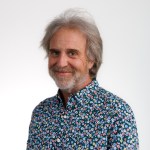
Mike Madrid, author of “The Latino Century: How America’s Largest Minority Is Transforming Democracy,” comes to Bookshop Santa Cruz on July 8. The event is free.
Have something to say? Lookout welcomes letters to the editor, within our policies, from readers. Guidelines here.
