

Quick Take
After having been dark for three years, the Santa Cruz Film Festival is coming back in October with new leadership and new energy. The goal? Not only to entertain and illuminate audiences, but also to build a viable film industry in Santa Cruz County.
For a while there, it looked like the Santa Cruz Film Festival was a goner. The annual event, which began with a bang 25 years ago, was laid low by the 2020 pandemic — like everything else in the world. It returned the following year, but has been dark the past three years.
But it appears that the bang is back.
The Santa Cruz Film Festival’s revival is in full swing, and in the second weekend of October, it will occupy several venues around town with close to a hundred film screenings, Q&As with filmmakers, panel discussions and, yes, even fancy parties. The festival is slated for Oct. 8-12, with an opening night screening at the Del Mar Theatre and an after-film gala at the Museum of Art & History.
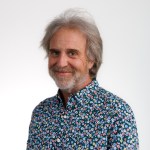
The festival marks its return under new leadership, Santa Cruz-based filmmaker Paul Bronislaw Kmiec assuming the role of executive director with producer and cinematographer Alanna Lee Nickles as director of operations. Providing continuity with the festival’s past as its programming director is film scholar Logan Walker, who has been curating the festival’s film offerings since 2014.
“A much more dramatic way to put it, it’s a resurrection,” said Kmiec, who had participated in past SCFFs as a contributing filmmaker. “It’s certainly a revitalization. It’s been something that’s been dead in Santa Cruz for a while. And some people you talk to will say, ‘I didn’t even know there was a Santa Cruz Film Festival anymore.’”
The festival began in 2000, largely under the bold leadership of Jane Sullivan, who manufactured splashy red-carpet events in town that included such celebs as David Arquette and Paul Reubens, the actor behind Pee-Wee Herman. Of course, that was a radically different era in the film industry’s era — pre-streaming, pre-Marvel-mania, pre-artificial intelligence, pre-social media influencers — when film festivals served a distinct role in the movie industry ecosystem.
As the new executive director, Kmiec (pronounced “kim-YETCH”) said that the film festival still serves a vital albeit different role in today’s chaotic industry.
“In the broader sense of the challenging times that the arts are facing,” he said, “we want people to know that cinema is crucial. It is necessary. It is the ultimate incorporation and confluence of all the other artistic practices, and it is also a very important part of the economy.”
As in years past, the SCFF is not aimed at a particular genre or kind of film, but more about excellence in independent film. Despite being down for three years, the SCFF this year received more submissions than it has in its history, around 600. From that pool, the SCFF team, which includes many volunteers, is creating a program that will eventually include about 100 films, which includes everything from shorts to feature-length films, both narratives and documentaries. The entire schedule has not yet been released, but the festival has announced its closing night film, a drama shot and set in San Francisco called “Outerlands,” which features a nonbinary protagonist. Other films that have been announced include a Greek ghost-story film titled “Arcadia” and the sex comedy/fantasy “Fucktoys,” which Variety touts as “John Waters-esque.”
Kmiec’s ambition for the festival reaches beyond what’s on screen. The festival will be aimed not only at audiences, but also at aspiring filmmakers and those who want to cultivate a film industry in Santa Cruz. In partnership with a production facility called Hwy17 Studios, the festival will be organizing a screenplay incubator program, to offer resources and guidance to filmmakers from idea to finished product.
Kmiec said that Hwy17 Studios marks a new step in establishing a filmmaking culture in Santa Cruz. “Of all the filmmakers who lived here and filmmakers who wanted to live here and wanted to make movies here,” he said, “one of the largest complaints was that there’s no base camp, no infrastructure, no equipment.” The new studio on Santa Cruz’s Westside features more than 22,000 square feet, touting itself as a “blank canvas” for a filmmaker. “You can even shoot rain inside,” said Kmiec.
Some of the panel discussions will also focus on the market for filmmakers. “We’ll talk about the evolving landscape of the film and media industry,” said Kmiec. “How do you get movies made in California and elsewhere? What are the tax incentives? How can you leverage them? What does it mean to be an independent filmmaker today?”
Screening venues for the upcoming festival include the Del Mar, the Colligan Theater, the 418 Project and more yet to be announced.
The Santa Cruz Film Festival will take place Oct. 8-12. We’ll continue to cover the festival as it announces its full lineup.
Have something to say? Lookout welcomes letters to the editor, within our policies, from readers. Guidelines here.
