


Quick Take
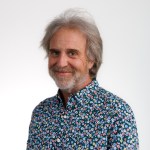
Santa Cruz-based filmmaker Erik Nelson is set to unveil his latest documentary, a look at a curious pop culture episode from 1972 when ex-Beatle John Lennon and wife Yoko Ono were given control over TV talk show "The Mike Douglas Show." Nelson will be on hand next week when "Daytime Revolution" screens at the Del Mar Theatre.
In the winter of 1972, worlds collided.
One of those worlds was “The Mike Douglas Show,” a daytime TV talk show hosted by a congenial, though not particularly charismatic, big band-era singer whose biggest hit was called “The Men in My Little Girl’s Life.” In his demeanor and presentation, Mike Douglas was old show biz all the way, and in his early 50s at the time, he was squarely in the Andy Williams/Perry Como generation.
The other world was John and Yoko.
In 1972, ex-Beatle John Lennon had become about as radical, politically and artistically, as any broadly popular mainstream artist ever got in American pop culture. With his wife and partner in all things, Yoko Ono, Lennon was one of the most volatile and controversial celebrities of the era. So, why did Douglas allow John and Yoko to program his daily talk show for a whole week? And what happened when the infamous duo took control of one of television’s most popular shows?
Santa Cruz filmmaker Erik Nelson explores those questions in his new documentary “Daytime Revolution,” to be screened at the Del Mar Theatre in downtown Santa Cruz next Wednesday, Oct. 9 (Lennon’s birthday).
Nelson is known locally for his radio shows — the news wrap-up “What a Week” and “The Grateful Dead Zone” on KSQD-FM. But he’s also an accomplished filmmaker, both as a collaborator with the legendary Werner Herzog (in “Grizzly Man” and “Cave of Forgotten Dreams,” among others) and as a writer/director in his own right (“The Cold Blue,” “A Gray State” and others). Nelson previously waded into the life story of John Lennon as executive producer of the documentary “The U.S. vs. John Lennon.”
The new film is tightly focused only on the week in February 1972 when Lennon and Ono, hip deep in outspoken anti-war activism, took control of “The Mike Douglas Show,” bringing in as guests such incendiary figures as Black Panther Bobby Seale, Yippie troublemaker Jerry Rubin, counterculture comic George Carlin and rock ’n’ roll legend Chuck Berry. Presiding over it all with patience and encouragement was Douglas, an indulgent and self-effacing presence on TV who is largely forgotten today.

“He was an avuncular, mainstream, apolitical guy,” said Nelson. “It’s astonishing how open-minded he was. And it was really astonishing to me what a gracious host he was, in the best sense of that word, as someone you’d love to have over at a dinner party, and how good Mike was, how he brought John Lennon out of his shell, how he made Jerry Rubin and Bobby Seale feel comfortable, how he presided over this madness for a week and really allowed John and Yoko to present their utopian vision to the nation.”
Nelson said that Ono was the driving force behind this partnership between the Douglas show and Lennon. “Yoko drove the train,” he said, “and John was just along for the ride, and really rose to the occasion. They wanted to do a five-day conceptual art event that took the medium of the talk show and turned into what Yoko would call a ‘happening.’” As for Mike Douglas and his producers, Nelson said, “I think they all crossed their fingers and stepped into the collective abyss together. Which is what made this whole thing so interesting — it could have gone terribly wrong, and it didn’t.”
There is at least one clip from that week that still rattles around regularly on YouTube. It’s the moment that Lennon performed live with his idol, the great Chuck Berry. Ono, banging a bongo, decides to contribute an otherworldly cackle to the mix, but when she tried to do it later, she found her microphone was muted.
“Yoko has got to Yoko,” said Nelson of the moment, “so she chimed in in her own inimitable fashion, and it’s a great moment. But I believe strongly that’s what made it really rock ’n’ roll. Not Chuck duck-walking, which he had done countless times by that point. Not John Lennon, as great as he was. It was Yoko, turning it all up to 11.”

As a storyteller, Nelson decided to present the five episodes — taped over the course of five weeks — in order, and to interview only those who were witnesses to the show at the time.
“The only arc that you see really is John getting more and more comfortable with Mike,” said Nelson. “And by the end of the week, he’s a fully on-board talk show host and he and Mike have really connected. You can see it.”
In the end the risk that Douglas and his team took paid off — though, Nelson said, Lennon’s appearance on “The Mike Douglas Show” put him squarely on the radar of the vindictive Nixon administration, and Lennon’s long fight against deportation began at that point. Still, show-business values prevailed and everyone behaved well.
“That’s what I think is striking about all this,” said Nelson. “It isn’t that it was anarchic, and it fell apart. It wasn’t. It was actually entirely civilized, yet the thoughts, ideas and music that were being expressed were so cutting edge and radical. That’s why I made this movie. That’s the point of the thing.”
Erik Nelson will be on hand at the Del Mar Theatre in downtown Santa Cruz for a screening of “Daytime Revolution” on Wednesday, Oct. 9. Showtime is 7 p.m.
Have something to say? Lookout welcomes letters to the editor, within our policies, from readers. Guidelines here.